


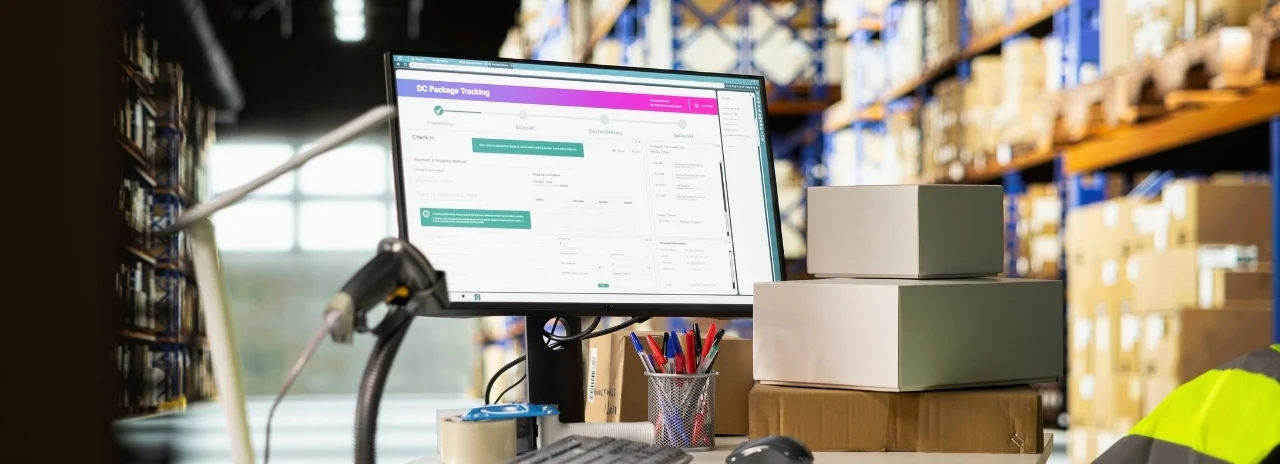


Why Logistics Leaders Build Connected Operations
Connected logistics software matters when fragmented data, manual coordination, delayed exceptions, and limited partner visibility constrain service, capacity, cost, and growth.

Workflow Digitization

79% System Connectivity

Real-Time Visibility

96% Experience Improvement

Security Controls

73% Scalable Operations
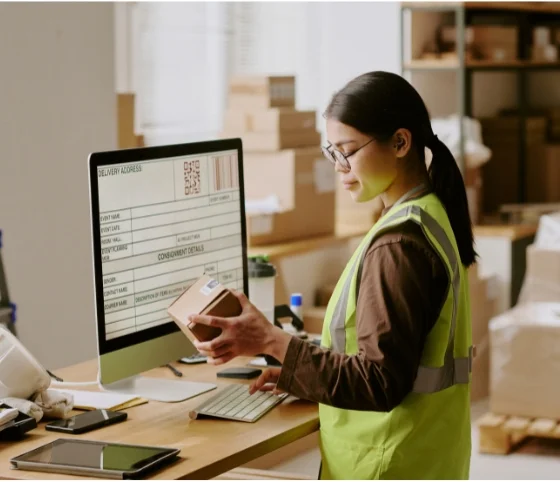
What Are Logistics Software Development Services
Logistics software development services digitize transportation, warehouse, fleet, fulfillment, tracking, routing, partner, and analytics workflows across supply chains. The work connects operational systems, mobile users, devices, carriers, customers, and data so teams can plan, execute, monitor, and improve goods movement.
Common reasons to modernize logistics operations
- Disconnected tools delay planning and exception response.
- Manual updates weaken shipment and inventory accuracy.
- Limited visibility hides capacity, cost, and service risk.
- Legacy integrations block partners and operational scale.
Trusted by Logistics Businesses Worldwide
Saffron Tech has developed logistics technology solutions for businesses across different operating environments, including freight applications, shipment tracking, IoT-based delivery tracking, and Power BI applications for packaging cost and delivery efficiency.
2.5K +
Success stories
150+
IT Professionals
30+
Industries Served
18+
Years of Experience
When Custom Logistics Software Fits
Custom logistics software fits operations where workflows, integrations, data, scale, customer experience, or competitive requirements exceed the practical limits of standard logistics products.
Distinct Operations
Build custom workflows when routing, contracts, service rules, assets, partner relationships, or customer commitments create meaningful operational differentiation. Keep standard modules where they already support common requirements.
Standard Processes
Use proven TMS, WMS, fleet, ERP, or marketplace platforms when established processes meet operational needs. Evaluate licensing, customization limits, integration effort, data ownership, upgrades, and switching costs before extending or replacing them.
Fragmented Systems
Add an integration and data layer when multiple logistics systems need to work together. Define system ownership, identifiers, event timing, data quality rules, and reconciliation before replacing operational applications.
Legacy Platforms
Modernize legacy logistics platforms in stages when critical operations must continue during the transition. Options may include refactoring, integration, module replacement, platform migration, or a broader rebuild based on business and technical requirements.
Process Uncertainty
Prototype a high-value workflow before committing to a wider transformation. Test representative users, operational data, exceptions, success measures, and real-world constraints to validate the approach before scaling.
Our Logistics Software Development Services
We shape each engagement around the network, goods, users, partners, operating rules, systems, devices, and measurable service outcomes. Modules can support new platforms or targeted modernization.
Transportation Management Systems
We design transportation workflows for planning, tendering, carrier coordination, dispatch, shipment execution, cost control, documentation, tracking, settlement, and exception management across inbound and outbound movements.
- Plan loads, modes, carriers, and schedules.
- Coordinate tendering, dispatch, and execution.
- Track milestones, costs, and exceptions.
- Support documents, billing, and settlement.
Warehouse Management Systems
We build warehouse workflows around receiving, putaway, storage, replenishment, allocation, picking, packing, staging, shipping, returns, labor, inventory accuracy, and connected automation equipment.
- Manage receiving, putaway, and storage.
- Guide picking, packing, and staging.
- Track inventory across warehouse locations.
- Connect scanners, labels, and automation.
Fleet Management
We create fleet workflows for vehicles, drivers, assignments, inspections, fuel, telemetry, utilization, compliance records, maintenance planning, incidents, costs, and operational performance across distributed locations.
- Track vehicles, drivers, and assignments.
- Monitor telemetry, utilization, and incidents.
- Plan inspections, service, and maintenance.
- Analyze fleet cost and availability.
Route Optimization
We support routing workflows that combine stops, capacity, service windows, driver constraints, road conditions, business rules, and replanning needs while keeping dispatchers accountable for operational decisions.
- Model stops, capacity, and service windows.
- Apply vehicle and driver constraints.
- Replan routes around live exceptions.
- Keep dispatchers controlling final assignments.
Tracking Portals
We build customer, partner, and operations portals that present shipment status, milestones, estimated arrival, documents, alerts, claims, proof of delivery, and self-service actions by role.
- Show shipment status and milestones.
- Share documents, alerts, and confirmations.
- Support claims and delivery evidence.
- Control access by user role.
EDI and API Integration
We connect carriers, shippers, warehouses, marketplaces, enterprise platforms, devices, and customers through governed messages, APIs, events, mappings, validation, monitoring, reconciliation, and support ownership.
- Map partner messages and business events.
- Validate identifiers, status, and quantities.
- Monitor failures, retries, and reconciliation.
- Version contracts without breaking operations.
Logistics Analytics
We unify operational measures across orders, inventory, warehouses, routes, carriers, vehicles, costs, exceptions, and service performance so leaders can act on consistent, traceable information.
- Unify trusted operational data models.
- Track service, cost, and capacity.
- Analyze delays, exceptions, and causes.
- Deliver role-based dashboards and alerts.
Integration and Real-Time Architecture
Logistics operations depend on timely and accurate information moving between internal systems, carriers, devices, customers, and external platforms. Saffron Tech designs integration architectures around data consistency, real-time updates, system dependencies, failure handling, and clear ownership.

Enterprise Integration
Connect ERP, order management, CRM, billing, procurement, inventory, finance, and master-data systems through consistent identifiers, mappings, reconciliation, versioning, and audit controls.

Logistics Platform Integration
Integrate TMS, WMS, fleet, yard, parcel, marketplace, carrier, and last-mile platforms while maintaining consistent shipment statuses, milestones, quantities, locations, documents, charges, and exception rules.

Device and Telematics Integration
Connect GPS, vehicle gateways, sensors, scanners, RFID, mobile devices, and warehouse equipment with appropriate device identity, timestamps, connectivity handling, buffering, security, and lifecycle controls.

Maps and External Data
Integrate routing, geocoding, traffic, weather, road restrictions, address, and location data while accounting for data freshness, coverage, licensing, privacy, usage limits, and provider dependencies.

Analytics and AI Integration
Connect operational events with data warehouses, dashboards, forecasting models, optimization services, and AI applications while maintaining data lineage, quality, access controls, latency requirements, evaluation, and human oversight.
Build a Reliable Event Model
A dependable logistics event model should distinguish between planned, observed, estimated, and corrected states. Each event can retain its source, timestamp, location, reason, confidence, and responsible party.
Why Choose Saffron Tech
Saffron Tech combines logistics domain understanding with software engineering, data, mobile, IoT, and business intelligence capabilities to build technology solutions around real-world transportation and warehouse operations.
Logistics Expertise
We understand workflows across shipping, transportation, warehousing, order management, routing, scheduling, tracking, billing, and customer communication.
Connected Systems
We integrate logistics applications with existing ERP, WMS, CRM, order management, and other enterprise systems to connect information across operations.
Real-Time Visibility
Our solutions can connect tracking, mobile, IoT, and analytics capabilities to help logistics teams monitor shipments, deliveries, and operational activity.
Custom Development
We build web, mobile, and custom logistics applications around specific workflows rather than forcing operations into a standard software model.
Data-Driven Operations
Our Power BI and analytics capabilities help logistics businesses analyze packaging costs, delivery efficiency, operational performance, and other business measures.
End-to-End Support
From solution definition and development through integration, deployment, and ongoing improvements, we support the technology lifecycle.
Technologies Supporting Logistics Operations
Saffron Tech combines web and mobile applications, enterprise integrations, IoT, analytics, databases, and automation technologies to support connected logistics operations. We select the technology stack around shipment visibility, warehouse workflows, transportation management, scheduling, routing, communication, and integration requirements.




























AI & Data

Cloud & Platform Engineering
Engineering & Development
DevOps & Delivery
Digital Experience
Technology Consulting
Global Expertise Across Operations
We develop technology solutions for logistics, warehousing, shipping, and transportation businesses, including logistics management systems, warehouse management solutions, transportation management systems, warehouse control systems, and custom shipping applications.







Enterprise-Grade Security & Compliance

ISO 27001

HIPAA Compliant

GDPR Complian

SOC 2 Type II
Case Studies
Before this, managing our ML workflows took a lot of manual effort. The automation has made things much easier for our engineering teams.

Rohan Mehta
Head of AI EngineeringWe had data across too many systems and it was slowing down decisions. The AI platform helped us bring everything together and made day-to-day operations much smoother.”

Dr. Michael Carter
Chief Technology OfficerForecasting used to take a lot of manual work. With AI handling the analysis now, our team can focus more on strategy and customer experience.

Alex Romero
VP Engineering“The biggest difference for us is visibility. We can now see potential issues before they affect production.”

Daniel Hughes
Chief Information Officer“Routing decisions used to take hours of planning. Now the system helps us make those decisions much faster.”

Sophia Lang
Head of Data & Technology“The AI monitoring tools help us spot problems early. It’s made managing the network much easier for our team.”

Kevin Patel
Chief Technology OfficerWhat Our Clients Say
Saffron Edge is an amazing and highly recommended SEO company. They are always responsive, professional, and best of all they show RESULTS! HIGHLY RECOMMENDED!

Salvabor Ordorica
Operations Manager, Translation CompanyThe quality is exceptional. I love their work, and I appreciate our back-and-forth.

Xanare
President, Flexyn GlobalI felt that they really understood my vision and were really excited about it.

Caitlin Thorpe
Founder, Seamless TherapyLogistics Software Development FAQs
These answers address the questions operations, product, technology, security, data, and procurement leaders commonly raise while comparing scope, delivery risk, integrations, and future readiness.
What do logistics software development services include


Who benefits most from custom logistics software?
When is standard logistics software better?
How should TMS, WMS, and ERP integrate?
How is real-time shipment tracking designed?
How should route optimization use AI?
What data does logistics analytics require?
How are mobile and offline workflows handled?
What affects logistics software development cost?
How long does logistics software development take?
How should implementation risk be reduced?
How will logistics software change through 2028?

Plan Your Logistics Software Roadmap
Share your network, users, workflows, systems, partners, devices, data, service goals, constraints, and modernization priorities. We will use discovery to define the suitable modules, architecture, integrations, controls, delivery model, required inputs, risks, milestones, and estimate.
Request a Logistics Discovery SessionFind out what Saffron Tech can do for you
- Free assessment and roadmap
- Custom solution recommendations
- ROI projections for your use case
Reach out to us
Reach out to us