


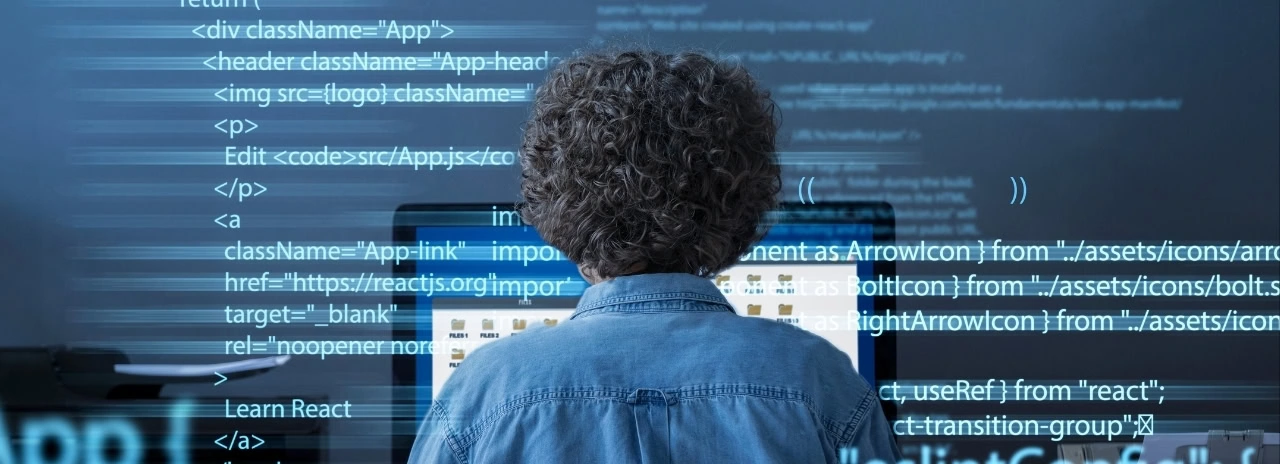


What Drives Businesses Toward React Development
Companies invest in React development when complex interfaces, frequent product changes, shared design standards, and long-term maintainability require an accountable frontend engineering approach.

80% Reusable UI

Legacy Modernization

Faster Releases

83% API Integration

Accessibility Quality

56% AI Readiness

What Are React Development Services
React development services design, engineer, modernize, test, deploy, and support component-based user interfaces using React and suitable production frameworks. Delivery covers architecture, experience design, state, data access, accessibility, performance, security, integrations, automation, observability, and sustainable, maintainable product evolution.
Four signals that React may fit
- Interfaces contain many interactive, reusable product patterns.
- Several teams need consistent, governed design components.
- Legacy frontend constraints slow every valuable release.
- Web products require flexible rendering and integration.
Trusted by Businesses Worldwide
Saffron Tech helps businesses build and evolve reliable React products through scalable frontend engineering, reusable components, secure integrations, automated testing, accessibility, performance optimization, and continuous product support.
2.5K +
Success stories
150+
IT Professionals
30+
Industries Served
18+
Years of Experience
When React Development Fits
React is a strong option for interaction-rich products, but it is not an automatic answer. Architecture should follow user journeys, content, rendering, integration, team, and operational needs.
| Product Scenario | How React Can Be Applied | Key Consideration |
|---|---|---|
| New digital product | Product discovery, framework selection, component architecture, implementation, testing, deployment, and measured iteration | Which journeys, business outcomes, constraints, and release evidence justify the investment? |
| Legacy interface | Incremental React adoption, route migration, design-system introduction, API adaptation, or controlled frontend replacement | Which boundaries reduce disruption while retiring the most expensive constraints first? |
| Scaling SaaS platform | Modular architecture, shared components, state and data patterns, observability, performance budgets, and release automation | Which product areas, teams, tenants, and workflows need independent evolution? |
| Enterprise portal | Role-aware workflows, secure integrations, accessibility, audit support, responsive interfaces, and operational administration | Which users, permissions, systems, controls, and service expectations define acceptance? |
| Content-led website | Framework-based rendering, content integration, route strategy, caching, accessibility, analytics, and performance controls | Which pages require static, server, client, or hybrid rendering behavior? |
| Simple static experience | Consider lighter web technology before adding React, framework, state, and operational complexity | Does the interface need enough interactivity and change to justify React ownership? |
Our React Development Services
We cover React delivery from product and architecture decisions through production operations. The final scope depends on application type, rendering needs, system landscape, risk, team model, and measurable acceptance criteria.
React Consulting and Architecture
We assess product requirements, existing code, rendering, state, data flows, integrations, design systems, performance, accessibility, security, delivery pipelines, and team capability before recommending an architecture and roadmap.
- Assess product and technical constraints.
- Select frameworks and rendering patterns.
- Define component and data architecture.
- Prioritize risks and delivery stages.
Custom React Application Development
We engineer customer portals, SaaS interfaces, enterprise applications, ecommerce experiences, dashboards, workflow tools, and interactive products using maintainable components, type-safe code, tested integrations, and controlled releases.
- Build responsive product workflows and interfaces.
- Connect components with secure APIs.
- Implement roles, states, and validations.
- Release tested features through automation.
React Modernization and Migration
We modernize outdated React code or introduce React into suitable legacy boundaries. Plans address framework versions, class components, state, routing, dependencies, tests, build tooling, APIs, deployment, and rollback.
- Audit code, dependencies, and risks.
- Define incremental migration boundaries first.
- Replace fragile patterns with tests.
- Protect releases with rollback options.
Design Systems and Component Engineering
We create reusable components, tokens, patterns, documentation, accessibility behaviors, visual states, contribution rules, and release practices that help product teams deliver consistent experiences without uncontrolled duplication.
- Translate design tokens into components.
- Document states, behavior, and usage.
- Test accessibility across shared patterns.
- Govern contributions and component releases.
React Performance and Accessibility Engineering
We measure real user experience, diagnose rendering and delivery bottlenecks, improve loading and interaction, and test accessible structure, navigation, focus, forms, feedback, and responsive behavior across priority journeys.
- Measure field and laboratory performance.
- Reduce unnecessary rendering and payloads.
- Test keyboard and assistive workflows.
- Verify responsive behavior across devices.
React Integration and Full Stack Delivery
We connect React interfaces with REST, GraphQL, events, identity, payments, content platforms, analytics, enterprise applications, and custom backends. Contracts, authorization, errors, retries, caching, and observability remain explicit.
- Integrate approved APIs and platforms.
- Design secure frontend-backend contracts.
- Handle loading, failure, and recovery.
- Trace transactions across connected services.
React Support and Product Evolution
We support production issues, upgrades, dependency risk, feature development, accessibility, performance, testing, monitoring, documentation, and technical debt. Coverage and service levels are agreed for each engagement.
- Resolve production issues using evidence.
- Upgrade frameworks and dependencies safely.
- Improve features through measured learning.
- Maintain tests, documentation, and observability.
Architecture Designed Around Your Product
Different products require different React architectures. We help you choose the right foundation based on functionality, performance, SEO, scalability, and long-term development needs.
| Client-Side Applications | For dashboards, authenticated platforms, and highly interactive workflows. |
| Server-Rendered Applications | For dynamic experiences where initial performance and crawlable content matter. |
| Static Applications | For stable websites, landing pages, and content-driven experiences that benefit from pre-generated pages. |
| Hybrid Applications | For products combining public content, dynamic functionality, and authenticated experiences. |
| Incremental React Adoption | For businesses modernizing existing applications without replacing the entire system at once. |
| Enterprise & Micro-Frontend Architecture | For large products where multiple teams need to manage and deploy different application areas independently. |
Build Accessibility and Security Into Delivery
Accessibility and security are built into the development process from the start, not treated as final checks before launch. We consider how users interact with the application, what data it handles, and where potential accessibility and security risks can arise.
Accessibility validation can be aligned with WCAG 2.2, while OWASP ASVS can provide a framework for evaluating web application security controls.

Semantic Interfaces
We create structured, meaningful interfaces using appropriate HTML, headings, landmarks, labels, roles, and status messages so critical user journeys remain understandable and usable.

Keyboard and Focus Management
Interactive experiences are designed to work with keyboard navigation, including menus, dialogs, forms, composite components, error states, and focus restoration.

Authentication and Authorization
We account for secure sessions, tokens, redirects, account recovery, multifactor authentication, authorization boundaries, and sensitive browser storage when building application flows.

Untrusted Content Protection
User-generated content, URLs, file uploads, third-party resources, and browser-facing capabilities are handled with appropriate rendering, encoding, sanitization, and validation controls.

Dependency Security
React applications often rely on multiple third-party packages. We maintain dependency visibility, review vulnerabilities, monitor updates, and address unsupported or unnecessary libraries as part of ongoing application maintenance.

Privacy and Data Protection
Client-side data, storage, tracking, logging, and error reporting are considered carefully to reduce unnecessary exposure of sensitive information and support the application's privacy requirements.
Test React Products at the Right Layers
Testing should focus on protecting the user experience and business-critical functionality without making the application unnecessarily difficult to change. We use a risk-based approach that considers application complexity, integration points, accessibility, performance, and the impact of potential defects.
Logic Testing
We validate business rules, utilities, transformations, selectors, and state transitions, including important boundaries, edge cases, and error conditions.
Component Testing
We test components through the behaviors users experience, including forms, content, interactive states, validation, accessibility, and failure handling.
Integration Testing
We verify that components, routing, application state, APIs, authentication, and supporting services work together correctly across priority workflows.
End-to-End Testing
Critical user journeys are tested across the application, covering workflows such as authentication, submissions, purchases, approvals, and other high-value actions.
Visual Testing
We check important interfaces across component states, screen sizes, themes, and representative content to identify unintended visual changes.
Nonfunctional Testing
We evaluate requirements beyond functionality, including accessibility, performance, security, browser compatibility, resilience, and observability.
Why Choose Saffron Tech
Choosing a React development partner requires more than frontend implementation. Saffron Tech connects React engineering with product architecture, reusable components, APIs, accessibility, testing, performance, security, cloud delivery, and long-term product support.
End-to-End React Expertise
From consulting and architecture to development, modernization, testing, deployment, and ongoing support, we cover the full React product lifecycle.
Scalable Frontend Architecture
We design component-based architectures that support reusable patterns, shared design systems, growing product teams, and evolving business requirements.
Modernization Without Disruption
We help introduce React into suitable legacy boundaries or modernize existing React applications incrementally, reducing unnecessary rewrite and release risk.
Secure API Integration
We connect React interfaces with REST, GraphQL, identity, payments, content platforms, enterprise systems, events, and custom backends using explicit contracts and authorization controls.
Performance & Accessibility Focus
We measure real user experience and improve loading, interaction, rendering, data access, responsive behavior, keyboard navigation, focus, forms, and assistive-technology support.
Cloud & Continuous Delivery
We support deployment automation, monitoring, observability, rollback, infrastructure integration, and controlled releases for production React applications.
AI-Ready Interfaces
We prepare React products for governed AI workflows including assisted search, drafting, decision support, generative UI, and bounded agentic experiences with appropriate permissions and human oversight.
Product-Focused Collaboration
We align engineering decisions with user journeys, business outcomes, technical constraints, measurable acceptance criteria, and the product roadmap.
Technologies Driving React Innovation
Our React teams use component-based architecture, modern frameworks, APIs, cloud platforms, automated testing, observability, and AI-enabled technologies to build secure, accessible, maintainable, and high-performing digital products.


























AI & Data

Cloud & Platform Engineering
Engineering & Development
DevOps & Delivery
Digital Experience
Technology Consulting
Global React Expertise Across Industries
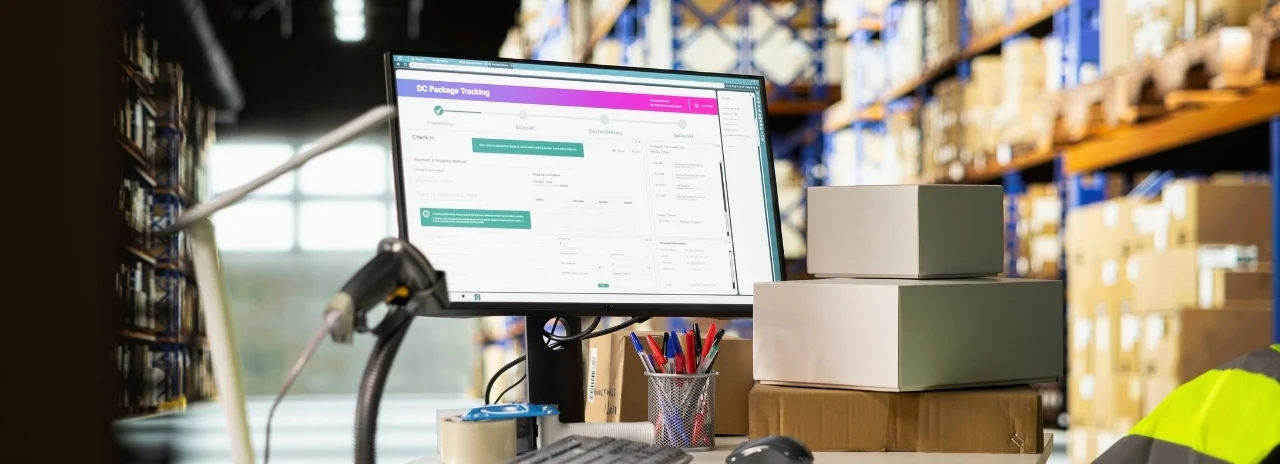
We provide full-cycle React development for businesses building customer portals, SaaS products, commerce platforms, enterprise applications, dashboards, and workflow solutions.







Enterprise-Grade Security & Compliance

ISO 27001

HIPAA Compliant

GDPR Complian

SOC 2 Type II
Case Studies
Before this, managing our ML workflows took a lot of manual effort. The automation has made things much easier for our engineering teams.

Rohan Mehta
Head of AI EngineeringWe had data across too many systems and it was slowing down decisions. The AI platform helped us bring everything together and made day-to-day operations much smoother.”

Dr. Michael Carter
Chief Technology OfficerForecasting used to take a lot of manual work. With AI handling the analysis now, our team can focus more on strategy and customer experience.

Alex Romero
VP Engineering“The biggest difference for us is visibility. We can now see potential issues before they affect production.”

Daniel Hughes
Chief Information Officer“Routing decisions used to take hours of planning. Now the system helps us make those decisions much faster.”

Sophia Lang
Head of Data & Technology“The AI monitoring tools help us spot problems early. It’s made managing the network much easier for our team.”

Kevin Patel
Chief Technology OfficerWhat Our Clients Say
Saffron Edge is an amazing and highly recommended SEO company. They are always responsive, professional, and best of all they show RESULTS! HIGHLY RECOMMENDED!

Salvabor Ordorica
Operations Manager, Translation CompanyThe quality is exceptional. I love their work, and I appreciate our back-and-forth.

Xanare
President, Flexyn GlobalI felt that they really understood my vision and were really excited about it.

Caitlin Thorpe
Founder, Seamless TherapyFAQs
These answers address React fit, frameworks, modernization, rendering, design systems, performance, accessibility, testing, security, React Native, pricing, engagement, and AI interface questions buyers commonly raise.
Is React the right choice for our product?


Should we use React alone or a framework?
Can React be added without rewriting everything?
How do server and client rendering differ?
How do you keep React applications maintainable?
How do you improve React application performance?
How is accessibility tested in React?
How are React applications secured?
Is React the same as React Native?
How much does React development cost?
How will AI affect React products through 2028?

Plan Your React Development Initiative
Share the product goal, users, priority journeys, current stack, rendering needs, APIs, design assets, accessibility target, performance evidence, security requirements, roadmap, team model, and delivery constraints. We will define discovery, architecture decisions, release scope, risks, estimates, acceptance evidence, and operating ownership.
Request a React Product AssessmentFind out what Saffron Tech can do for you
- Free assessment and roadmap
- Custom solution recommendations
- ROI projections for your use case
Reach out to us
Reach out to us